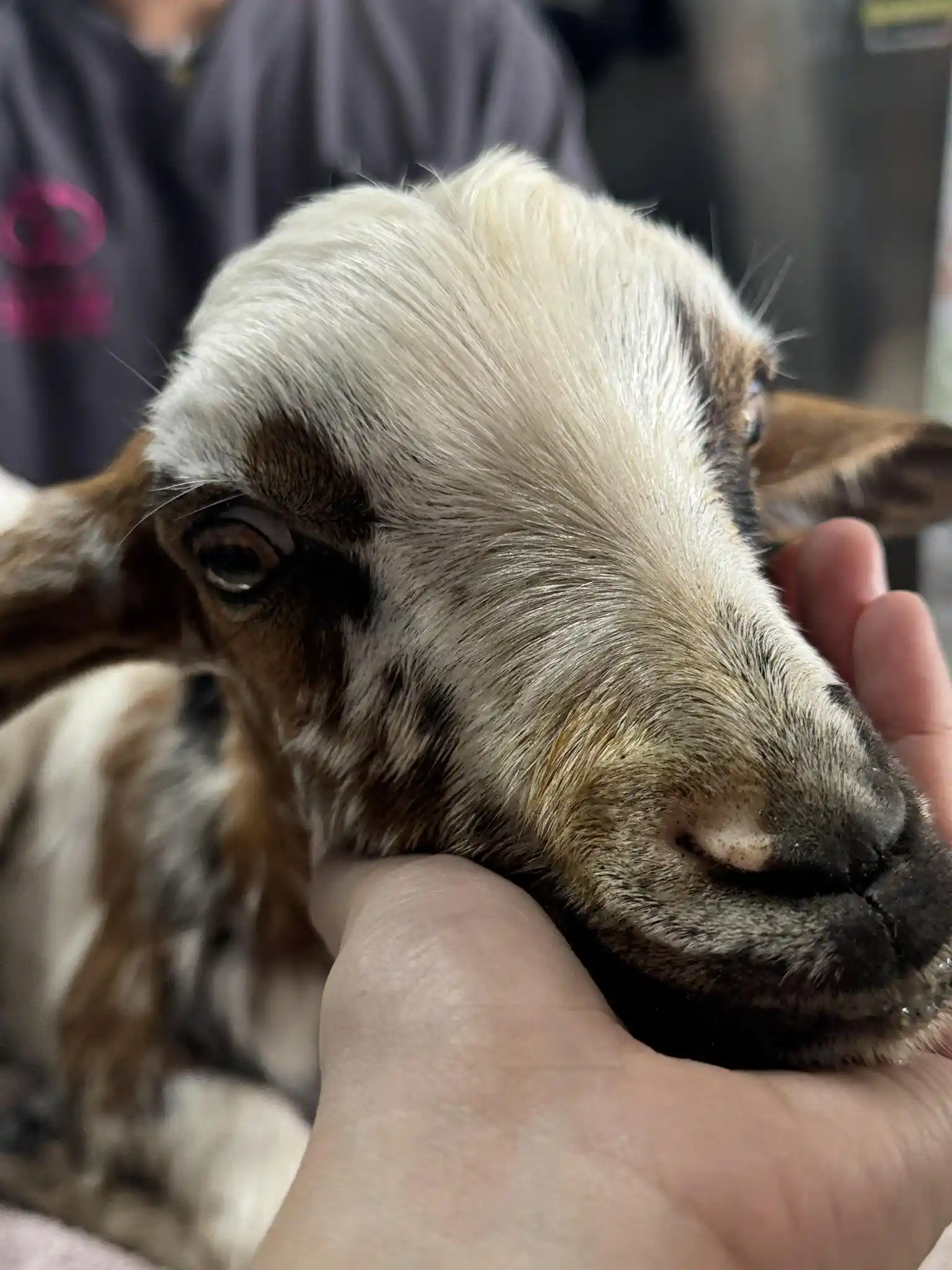
He was meant for slaughter. Instead, he got a name, and a chance to live.
It was a Saturday morning when a shout carried down the road: “May naligsan!”
A few metres away, several men stood in a circle. On the ground was a goat.
The Goat on the Road
He was less than a year old. Still a baby, at least to my eye. One of his legs had been badly hit by an electric tricycle. His breathing was laboured. His head rested on the ground. Not sleeping. Just tired. Overheated. In pain.
Slowly, the people around him started to leave.
“Wala na. Ihawon na ni,” someone said.
They left him there. Waiting for the owner. Waiting for slaughter.
This Is Normal Here
Goats roam freely here, just like dogs and cats. That is normal in many parts of the Philippines. I am not vegan, and I understand that goats are food to many people. That is our reality.
Still, looking at him, something else was clear.
Exhaustion.
Defeat.
God knows how many slaughters he had already witnessed in his short life. Did he know this was waiting for him too?
Choosing Not to Walk Away
It was almost noon, and the heat was intense. Leaving him there, injured and in pain under the sun, was not an option.
With a neighbour’s help, he was carried to the car, and we drove straight to the vet.
The Vet’s Options
When it was our turn, the vet examined him and said his leg was broken.
There were two options.
Option one. Treat him and give antibiotics. Once treated, he could no longer be sold for meat because of the medication, which meant finding the owner and buying the goat.
Option two. Leave him untreated, take him back, and let him be slaughtered.
I did not even know who the owner was. I chose the first option, and named him Lucky.
Meeting the Owner
Lucky stayed at the vet. That same evening, around 7, an old woman came looking for me. She was his owner, and she had heard who had brought him in.
“Why did you bring it to the vet?” she asked. “Napagastos ka pa. Pwede naman to katayon na lang.”
I understood her. This is how many people see goats. As food. Nothing more.
I told her I would buy him. She came back the next day to collect the payment.
For 2,500 pesos, Lucky’s life was bought back.
He is still at the vet now, being treated, healing slowly. Once he is better, he will have a place where he is no longer seen as food, but as a family member.
A Quiet Realisation
It was the right choice.
The fate of all goats, or of all animals seen only as food, will not change because of one rescue. But for Lucky, it mattered.
Sometimes, kindness does not change the world. Sometimes, it only changes one life.
And sometimes, that is enough.
Choosing Not to Walk Away
It was almost noon. The heat was intense. There was no way I could leave him there. Injured. In pain. Under the sun.
I got my car. Asked a neighbor to help me carry the goat to the back. Then I drove straight to the vet.
The Vet’s Options
When it was our turn, the vet examined him and said his leg was broken.
There were two options.
Option one. Treat the goat. Give antibiotics. But once treated, he could no longer be sold for meat because of the medication. That meant I would need to find the owner and buy the goat.
Option two. Do not treat him. Bring him back. Let him be slaughtered.
I did not even know who the owner was.
I chose the first option.
I named him Lucky.
Meeting the Owner
I left Lucky at the vet and went back to the shop.
That same day, around 7 in the evening, an old woman came in looking for me. She was the owner of the goat. She had heard I was the one who brought him to the vet.
“Why did you bring it to the vet?” she asked.
“Napagastos ka pa. Pwede naman to katayon na lang.”
I understood her. This is how many people see goats. As food. Nothing more.
I told her I would buy him.
She came back the next day to collect the payment.
For 2,500 pesos, I saved a life.
Lucky is still at the vet now. He is being treated. Healing slowly.
I am committed to his recovery. Once he is better, I will find him a place where he is no longer seen as food. But as a family member.
A Quiet Realization
I know I made the right choice.
I may not change the fate of all goats. Or all animals that are only seen as food.
But for Lucky, it mattered.
Sometimes, kindness does not change the world. Sometimes, it only changes one life.
And sometimes, that is enough.